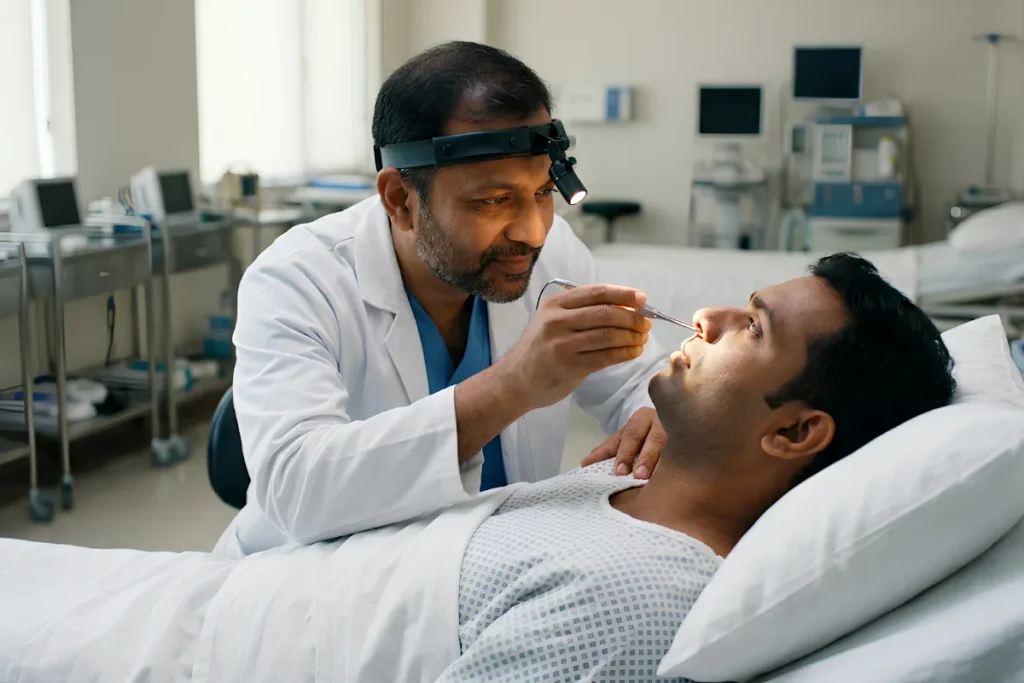
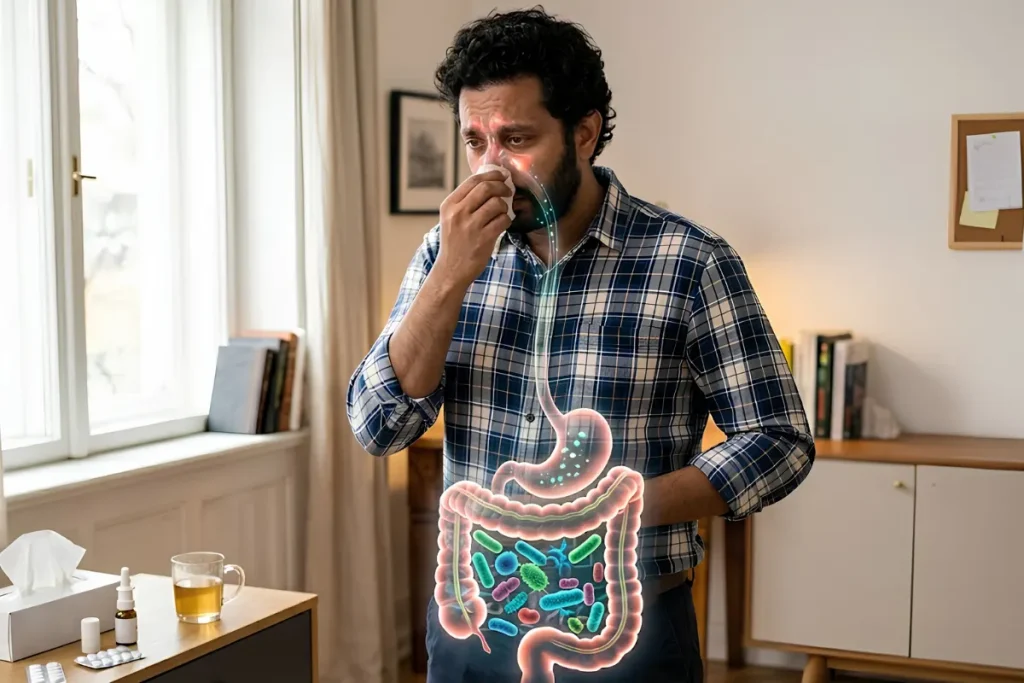
Nasal Polyps Surgery may become necessary when nasal polyps start causing persistent breathing difficulties and repeated infections. Nasal polyps are soft, painless and non-cancerous growths that develop on the lining of your nasal passages or sinuses. They often hang down like teardrops or grapes and result from chronic inflammation associated with asthma, recurring infections, allergies or certain immune disorders. While small polyps might not cause any noticeable issues, larger growths or groups of polyps can block your nasal passages. This can lead to breathing problems, a lost sense of smell and frequent infections that can significantly disrupt your daily life.
Our primary goal with any treatment plan we develop is to reduce the size of the polyps or eliminate them entirely to restore your quality of life. For many of our patients in India, where pollution and seasonal allergens are common triggers, the journey toward relief begins with conservative medical management. However, when these methods no longer provide the necessary relief, understanding the transition to surgical options becomes essential for your long-term health and well-being.
Can Nasal Polyps Be Managed With Medication?
Medical treatment is almost always the first line of defense we recommend against nasal polyps. We typically suggest a combination of therapies aimed at reducing inflammation and opening up the airways. Nasal corticosteroid sprays are the most common starting point because they are safe for long-term use and effectively shrink polyps by calming the immune response in the nasal lining. In cases of more severe swelling, we may prescribe a short course of oral steroids to provide a rapid reduction in polyp size and symptomatic relief.
In recent years, we have also seen great results with advanced medical options like biologics. These are injectable medications that target the specific type of inflammation causing the polyps to grow in the first place. While these medications can be highly effective, they require consistent usage and may not work for every patient. If your polyps remain large despite these aggressive medical efforts, it usually indicates to us that the physical obstruction is too significant for medicine alone to resolve effectively.
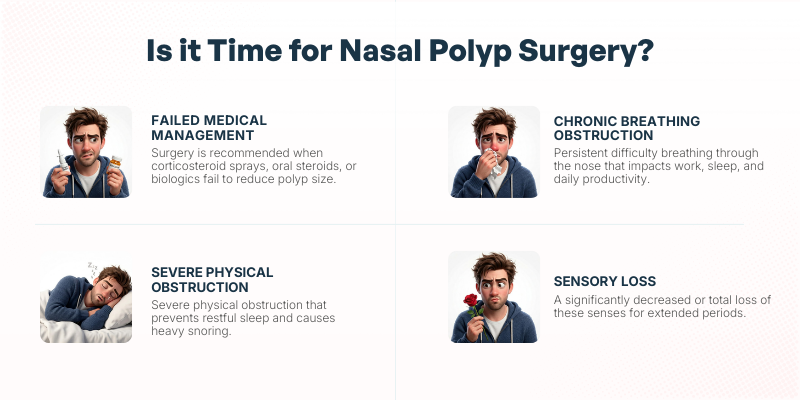
When is Surgery Recommended for Nasal Polyps?
We recommend surgery, specifically Functional Endoscopic Sinus Surgery (FESS) or a nasal polypectomy, when medical therapy fails to shrink or eliminate the polyps. We consider surgery when you continue to suffer from severe symptoms that impact your work, sleep and overall productivity. We usually make this decision together after a thorough evaluation where we use nasal endoscopy and a CT scan to map the extent of the disease and your specific sinus anatomy.
Common indications that we use to determine if surgery has become necessary include:
- Persistent difficulty breathing through your nose despite using steroid sprays and washes.
- A significantly decreased or total loss of your sense of smell and taste for extended periods.
- Recurring or chronic sinus infections that do not clear up with standard antibiotic treatments.
- Sleep apnea or severe snoring caused by physical nasal obstruction that prevents restful sleep.
- The presence of a massive polyp burden that physically blocks the natural drainage of your sinuses.
- Complications such as pressure in the face, eyes or forehead that medicine cannot alleviate.
Can Nasal Polyps Surgery Prevent Recurrence?
It is important to understand that nasal polyps are a manifestation of a chronic inflammatory condition. While surgery is excellent at “resetting” your nasal environment and removing the physical blockages, it does not cure the underlying tendency for inflammation. From our clinical experience and extensive research, recurrence is relatively common if maintenance care is ignored. On average, patients may see a return of symptoms about seven years after surgery if they do not follow a strict long-term management plan.
To minimize the risk of recurrence, we emphasize that surgery is just one part of a lifelong management strategy. We find that the continued use of nasal steroid sprays and regular saline irrigations after surgery are vital for success. These practices help keep your newly opened sinus pathways clear and suppress the inflammation that triggers new polyp growth. By staying ahead of the curve and keeping regular follow-up appointments with us, you can enjoy many years of clear breathing and healthy sinuses.
What are the Post Surgery Recommendations?
The recovery period after we perform a nasal polypectomy or FESS is generally around two weeks for most of our patients. During this time, your nasal lining is healing and the risk of bleeding or infection is at its highest point. We provide detailed instructions to ensure you have a smooth recovery and to protect your surgical results. The first few days typically involve managing mild discomfort and some bloody discharge, which we assure you is a normal part of the healing process.
Key recommendations we provide for a successful recovery include:
- Perform saline irrigations at least three times a day to wash out clots and prevent crust formation.
- Refrain from blowing your nose forcefully for at least ten days to avoid triggering a nosebleed.
- Avoid strenuous exercise, heavy lifting or bending your head below the waist for at least two weeks.
- Keep your head elevated while sleeping to reduce swelling and nasal pressure during the initial days.
- Avoid irritants like cigarette smoke, dust and very dry air which can inflame the healing tissue.
- Attend all scheduled follow-up visits so we can perform the necessary debridement of your nasal passages.
Conclusion and Your Path to Relief
Choosing to undergo surgery for nasal polyps is a significant decision that can lead to a dramatic improvement in how you breathe and feel every day. While the chronic nature of polyps requires ongoing care, modern surgical techniques combined with our expertise ensure that the procedure is as safe and effective as possible. Restoring your sense of smell and clearing your airways is achievable with a committed post-operative plan and a focus on long-term wellness.
If you are struggling with persistent nasal blockage or have been told you have polyps that are not responding to sprays, it may be time for a professional evaluation. As the home of India’s first Sinus Super Specialist, we have helped thousands of patients reclaim their breath through advanced sinus care. You do not have to live with a blocked nose or constant sinus pressure.
Ready to breathe easier? Schedule an appointment with us today to discuss your options. For more in-depth information on managing your condition, you can also buy “The Sinus Book” on Amazon, which is a practical guide written by Dr. Chaitanya Rao to help you understand and manage your nose and sinus health.
FAQs
Nasal polyps surgery is needed when medications fail to relieve severe nasal blockage, loss of smell, or chronic sinus infections.
The most common procedure is Functional Endoscopic Sinus Surgery (FESS), a minimally invasive technique to remove polyps and clear sinuses.
Most patients recover within 10–14 days, with full internal healing over several weeks.
Yes, nasal polyps can recur, but regular use of nasal steroid sprays and follow-up care helps prevent regrowth.