If you suffer from chronic rhinosinusitis, you know how frustrating it can be. Constant nasal blockages, loss of smell, and facial pain can make daily life very difficult. Many patients try endless rounds of medications, antibiotics, and nasal sprays. Sometimes, even these standard treatments do not bring lasting relief. You might feel like you are completely out of options. But medical science is always advancing rapidly.
Today, I want to talk about a major breakthrough in sinus care. It is a highly effective new class of medications called biologics. Biologics are completely changing the way we handle severe, recurring sinus issues. Let us explore what these innovative treatments are and how they might help you breathe easier once again.
What Are Biologics?
Biologics are highly advanced medical treatments. In the medical world, they are also known as monoclonal antibodies. Traditional medicines often treat inflammation broadly across the whole body. Biologics work very differently. They are specifically designed in laboratories to target the exact immune pathways causing your sinus problems. Think of them as a highly precise tool rather than a blunt instrument.
In conditions like chronic rhinosinusitis with nasal polyps, the body has a specific immune overreaction. This immune response is often called type 2 inflammation. Biologics work by blocking the specific proteins that cause this targeted swelling. These trouble-causing proteins are known as interleukins and immunoglobulin E (IgE). By stopping these triggers directly, biologics shut down the inflammation right at its source.
How Are Biologics Useful in Managing Chronic Rhinosinusitis?
Biologics are extremely useful for patients with severe nasal polyps. They are usually given to those whose symptoms are not controlled by standard steroid sprays or drops. Patients typically receive these drugs through regular injections at the clinic. Over a period of time, biologics can significantly shrink the physical size of nasal polyps. They also help clear up stubborn nasal congestion and reduce heavy facial pressure.
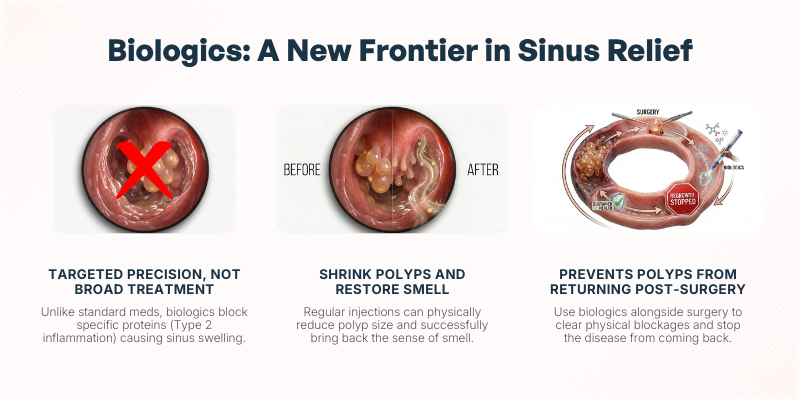
One of the most exciting benefits is the return of the sense of smell. Many patients with severe polyps lose their ability to smell completely, and biologics can successfully restore it. They also drastically reduce the need for taking strong oral steroids. This is a huge relief, as long-term oral steroids can cause many unwanted side effects. For many suffering patients, biologics greatly improve their overall quality of life.
Are Biologics a Substitute or Complimentary Therapy for Surgery?
A common question I get is whether biologics can completely replace surgery. The short answer is no. Biologics are generally considered a complimentary therapy to surgery, not a total substitute. Current European medical guidelines recommend that patients undergo endoscopic sinus surgery first. Surgery is still the most effective way to physically remove large polyps and open blocked sinus pathways. It is also much more cost-effective than starting with long-term biologic therapy.
However, surgery alone does not always cure the underlying immune problem. Nasal polyps have a high tendency to grow back after surgery in severe cases. This is exactly where biologics truly shine. If your polyps return rapidly after a successful surgery, biologics can be added to your treatment plan. By combining advanced surgery with biologics, we can clear the physical blockage and prevent the disease from coming back.
Are Biologics Approved for Use in India?
Yes, biologic therapies are indeed available and approved for use in India. Specifically, a biologic called Omalizumab (Xolair) has been approved by the Central Drugs Standard Control Organization (CDSCO). It is officially approved as an add-on therapy for adults with severe chronic rhinosinusitis with nasal polyps. This offers a fantastic new ray of hope for Indian patients who do not get adequate relief from regular nasal sprays.
Other biologics like Mepolizumab, Benralizumab, and Dupilumab are also available in India. Currently, they are widely used across the country for treating severe asthma. Many patients with severe sinus polyps also suffer from asthma at the exact same time. For these specific patients, using these biologics can successfully treat both their severe asthma and their recurring sinus polyps simultaneously.
Conclusion
Managing severe chronic rhinosinusitis can often feel like a never-ending battle. But you certainly do not have to suffer in silence anymore. Biologics represent a fantastic new tool in our modern treatment toolkit. At Dr. Rao’s ENT Super Speciality International Hospital, we firmly believe in patient-centric care combined with the absolute latest medical advancements. Whether you need advanced Navigation Sinus Surgery or biologic therapy, we have the right comprehensive treatment plan for you.
If you are constantly struggling with recurring sinus issues, it is time to seek expert help. As India’s first Sinus Super Specialist, I am here to help you breathe easy again. Please visit sinusdoctor.com to schedule your personalized appointment today. You can also grab a copy of The Sinus Book on Amazon for a complete guide to your sinus health. Do not forget to subscribe to the SinusDoctor YouTube channel and follow our Instagram page for more helpful patient education videos!
FAQs
Biologics target specific immune pathways responsible for inflammation in Chronic Rhinosinusitis, especially in patients with nasal polyps. They help reduce polyp size, improve breathing, and restore the sense of smell.
Biologics are not a replacement for surgery. Endoscopic sinus surgery removes physical blockages, while biologics control the underlying immune inflammation. In many cases, both treatments work best together.
Yes. Omalizumab (Xolair) is approved in India as an add-on therapy for severe Chronic Rhinosinusitis with nasal polyps. Other biologics are also used in select cases.
Patients with severe Chronic Rhinosinusitis with nasal polyps who do not respond to nasal steroid sprays, require repeated oral steroids, or have recurrent polyps after surgery may benefit from biologics.