If you’ve been dealing with allergic rhinitis for years, you’ve probably tried everything – nasal sprays, antihistamines, maybe even sinus surgery. And yet, every winter or when dust fills the air, you’re back to sneezing, congestion, and that itchy feeling in your nose. You might have even stumbled across articles online suggesting that your gut bacteria could be playing a role in your sinus troubles. The emerging gut health and allergic rhinitis connection has attracted growing attention from researchers and patients alike. Is this true? Can fixing your gut actually help your allergic rhinitis?
The short answer is: there’s something to it, but it’s not the whole story.
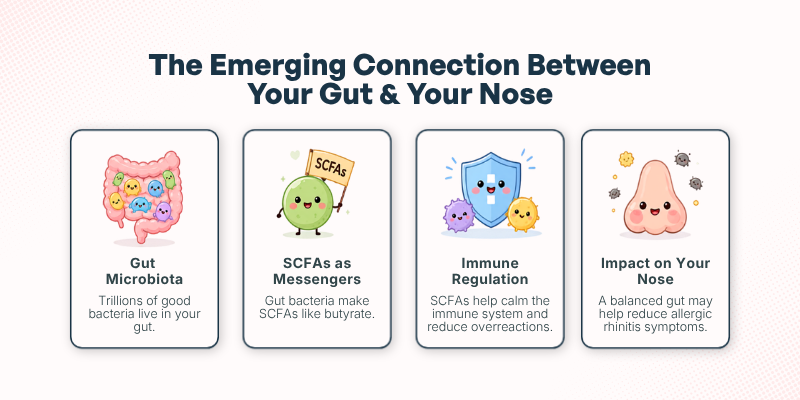
The Emerging Connection Between Your Gut and Your Nose
Over the past few years, researchers have started paying attention to the trillions of bacteria living in your digestive system. These bacteria, collectively called your “microbiota,” do far more than just help you digest food. They’re increasingly recognized as having a surprising influence on your immune system, including how your body reacts to allergens.
Recent studies have found that people with allergic rhinitis often have different gut bacteria compared to people without the condition. Some of these studies even show that certain beneficial bacteria are reduced in AR patients. But here’s the important part: while researchers have noticed these differences, they’re still working to fully understand what’s causing what and how significant these changes actually are.
How Your Gut Bacteria Might Influence Your Nose
The connection comes down to something called short-chain fatty acids, or SCFAs. When your gut bacteria ferment fiber from the food you eat, they produce these compounds, particularly one called butyrate. Think of SCFAs as molecular messengers that help regulate your immune system. They work to calm down overactive immune responses and strengthen the barrier of your intestines.
In people with allergic rhinitis, research suggests that these protective SCFAs are often lower than normal. This reduced production may mean your immune system doesn’t have the “brakes” it needs, making it more likely to overreact to harmless allergens like pollen or dust mites. The result? The sneezing, congestion, and itching you experience.
This is a fascinating mechanism, and the science behind it is sound. But before you rush to stock your pantry with probiotics, there’s something you need to know about how strong this evidence actually is.
What the Research Really Shows (Honest Assessment)
When I review the latest studies on this topic, the findings are encouraging but modest. A double-blind, placebo-controlled trial published in 2024 showed that patients who took probiotics combined with prebiotics for 90 days experienced a reduction in their symptoms. However, the reduction was small to moderate – not life-changing, but measurable.
More importantly, the mechanisms are still being worked out. Most research shows correlations: AR patients have different gut bacteria than healthy people. But correlation isn’t the same as causation. We don’t yet fully know whether the gut dysbiosis (imbalance of bacteria) is causing the allergic rhinitis, or whether the allergic condition itself is changing the microbiota.
There’s also significant variation between different studies. The specific bacteria that seem problematic in one study aren’t always consistently problematic in another. This tells me we’re still in the early stages of understanding this relationship.
What This Means for Your Treatment
Here’s what I tell my patients: the gut-immune connection is real and worth paying attention to, but it should complement your existing allergic rhinitis management, not replace it.
If you have allergic rhinitis, the foundational treatments remain important: intranasal corticosteroid sprays, antihistamines, and allergen avoidance are all evidence-based and effective. Some patients benefit significantly from immunotherapy (allergy shots or sublingual tablets). In certain cases, minimally invasive sinus surgery like balloon sinuplasty can provide lasting relief.
Taking care of your gut through probiotics, eating fiber-rich foods, and maintaining good digestive health might provide additional benefit – especially if you also have digestive issues. But it’s not a substitute for these proven approaches.
What You Can Actually Do
If you want to support your gut health as part of a comprehensive approach to allergic rhinitis, focus on the basics:
- Eat plenty of fiber from vegetables, fruits, and whole grains (this feeds your beneficial bacteria)
- Consider a probiotic supplement or fermented foods like yogurt or idli if you’re interested
- Stay hydrated
- Manage stress (which affects both your gut and your immune system)
- Continue with your conventional AR treatments as prescribed
Gut Health and Allergic Rhinitis: The Bottom Line
Your gut bacteria are part of your health story, and emerging research suggests they may have some influence on how your nose reacts to allergens. But this is an emerging area of science, not yet proven enough to be your primary treatment strategy.
If you’ve been struggling with persistent allergic rhinitis despite trying conventional treatments, or if you want to explore all available options including how to optimize your overall health, I’d like to work with you to find an approach tailored to your specific situation.
I’ve also written extensively about the science of sinusitis and allergic rhinitis in The Sinus Book, which walks through not just the conventional wisdom but also the emerging research on managing these conditions effectively. You can find it on Amazon and Flipkart.
The key is treating allergic rhinitis comprehensively – which means not ignoring any potentially helpful avenue, but also not overstating what any single approach can do.
Ready to discuss your allergic rhinitis treatment options? Schedule a consultation with me to explore what approach might work best for your specific situation. Your path to breathing easier might involve your gut health – but it will certainly involve a well-designed, evidence-based treatment plan.
FAQs
Research suggests that gut health may influence allergic rhinitis through its effects on the immune system. An imbalance in gut bacteria may contribute to increased allergic responses.
Gut bacteria produce compounds called short-chain fatty acids (SCFAs) that help regulate immune function. Lower levels of these compounds may be linked to allergic conditions such as allergic rhinitis.
Some studies show that probiotics may provide mild to moderate improvement in allergic rhinitis symptoms, but they should not replace conventional treatments.
Fiber-rich foods such as fruits, vegetables, whole grains, legumes, yogurt, and fermented foods can help support a healthy gut microbiome.
No. Gut health strategies should complement, not replace, evidence-based treatments such as antihistamines, nasal steroid sprays, and allergen avoidance.
You should consult an ENT specialist if your symptoms are persistent, interfere with daily life, do not respond to medications, or are associated with recurrent sinus infections.