Do you feel that your nose has a mind of its own? Streaming, sneezing, or feeling perpetually blocked. Many people in India and across the globe struggle with these symptoms daily. As a specialist in sinus and nasal health, I often see patients who are exhausted by the cycle of seasonal or year-round allergies.
One of the most common tools we use to combat these symptoms is a class of medication known as antihistamines. In this guide, we will break down what allergic rhinitis is, how histamines work, and how to use antihistamines effectively as part of your allergic rhinitis treatment plan.
What Is Allergic Rhinitis?
Allergic rhinitis is the clinical term for what many individuals term “hay fever.” It is an inflammatory condition of the nasal passages triggered by an overreaction of the immune system to particles in the environment. These particles, called allergens, are typically harmless to most people but cause a defensive flare-up in those with sensitivities.
Common triggers include:
- Pollen (Seasonal Allergic Rhinitis)
- Dust mites, mold, and pet dander (Perennial Allergic Rhinitis)
- Occupational irritants, such as chemicals or dust, in the workplace.
The Role of Histamine in Allergic Reactions
To understand how medications work, we first have to look at the cause of the trouble: Histamine.
Histamine is a natural chemical produced by your immune system. When your body detects an allergen, “mast cells” in the nasal lining release histamine. This causes swelling (congestion), mucus production (runny nose), and itching. Antihistamines work like “plugs” that fill the docks where histamine usually lands, stopping the signal before it can cause symptoms.
Which Antihistamine is Best for Allergic Rhinitis?
Patients often ask me, “Which antihistamine is best for allergic rhinitis?“ The answer depends on your specific symptoms and lifestyle.
- For sneezing and itching: Oral second-generation antihistamines like Cetirizine or Fexofenadine are excellent.
- For ocular symptoms: If you have watery, itchy eyes, antihistamine eye drops (like Olopatadine) are often the most effective.
- For persistent symptoms: Intranasal antihistamine sprays (like Azelastine) work directly on the nasal lining and can be more effective for congestion than oral pills.
Consult a healthcare provider before initiation of any medication or therapy.
Antihistamine for Allergic Rhinitis Without Drowsiness
One of the biggest concerns with older allergy medications was the intense sleepiness they caused. If you need an antihistamine for allergic rhinitis without drowsiness, you should look for “Second-Generation” or “Third-Generation” antihistamines. To be consumed only under medical supervision.
How Long Do Antihistamines Take to Work?
If you are in the middle of an allergy attack, you likely want to know: How long do antihistamines take to work?
- Oral Pills: Most second-generation antihistamines begin working within 1 to 3 hours, reaching their peak effect around 8 to 12 hours.
- Nasal Sprays: These usually work faster, often providing relief within 15 to 30 minutes.
- Eye Drops: Relief is often felt within minutes of application.
Side Effects of Antihistamines for Allergic Rhinitis
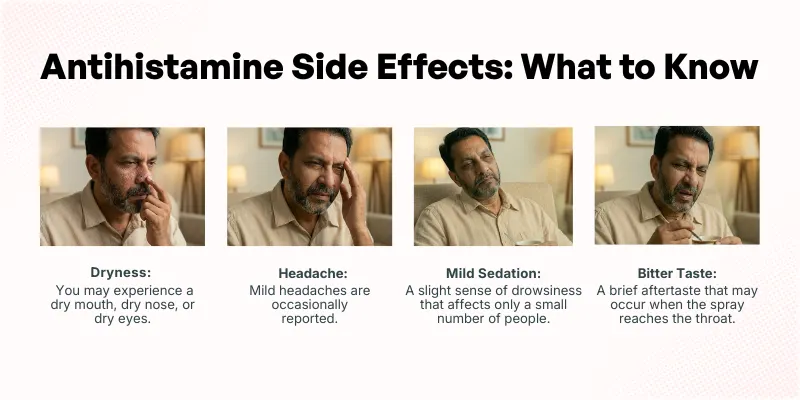
While modern antihistamines are very safe, they are not completely without risk. Common side effects of antihistamines for allergic rhinitis include:
- Dryness: You may experience a dry mouth, dry nose, or dry eyes.
- Headache: Mild headaches are occasionally reported.
- Mild Sedation: As mentioned, even “non-drowsy” types can affect a small number of users.
- Bitter Taste: This is common, specifically with intranasal sprays like Azelastine, if the liquid drips down the back of the throat.
Antihistamine for Allergic Rhinitis in Children or Adults
Choosing an antihistamine for allergic rhinitis in children or adults requires careful consideration of age and dosage, usage contingent upon a doctor’s consultation.
- Adults: Most adults can safely use standard over-the-counter allergy pills. However, if you have high blood pressure, it is vital to consult your doctor before taking any “D” versions (like Cetirizine-D). The added decongestant in these medicines can increase your heart rate and worsen blood pressure issues.
- Children: While many allergy medicines are approved for children 6 and older, do not give them to younger children without a direct recommendation from an ENT specialist or pediatrician. For children under 6, your doctor may recommend specific liquid doses. Always follow their guidance strictly to avoid side effects like extreme sleepiness or unusual hyperactivity.
When Antihistamines May Not Be Enough
Sometimes, blocking histamine isn’t enough. If your symptoms are “Moderate-to-Severe,” you may need advanced treatments that combine an antihistamine and a steroid for faster, broader relief.
Conclusion
Antihistamines are a cornerstone of modern allergy care. By understanding which type to use and when to take it, you can significantly reduce the impact of allergies on your daily life.
However, if your symptoms persist despite trying these medications, or if your nose still feels constantly blocked, it’s time to look deeper. As a sinus doctor, my goal is to help you find a long-term solution so you can breathe freely again.
Are you planning to go for a treatment or still have some burning questions? Schedule an appointment with me for a personalized treatment plan.
FAQs
Yes, there is a strong genetic link. If one or both parents have allergies, the children are significantly more likely to develop them.
Allergies usually involve itchy eyes/nose and thin, clear mucus. A cold often comes with a sore throat, body aches, and thicker, colored mucus.
Yes. Systemic inflammation and poor sleep quality caused by congestion often lead to cognitive tiredness or “brain fog.”
There is no absolute permanent cure, but allergen immunotherapy (AIT) is the only treatment that can change the course of the disease and provide years of relief after treatment ends. Other medications like sprays and pills only manage symptoms temporarily and do not fix the underlying allergy.