Understanding Tonsillectomy: Coblation vs Traditional Tonsillectomy

If you or your child has been struggling with recurrent throat infections or trouble breathing while sleeping, a tonsillectomy can be a life-changing step toward feeling better. While the idea of surgery can feel overwhelming, understanding Coblation vs Traditional Tonsillectomy helps patients see how advances in medical technology have made this common procedure safer, more precise, and more patient-friendly than ever before.. 

As an ENT specialist, I want to help you feel confident about your care. Below is a clear, patient-friendly overview of the two main surgical approaches used today – traditional tonsillectomy and coblation tonsillectomy – to help you understand how each works and what to expect.
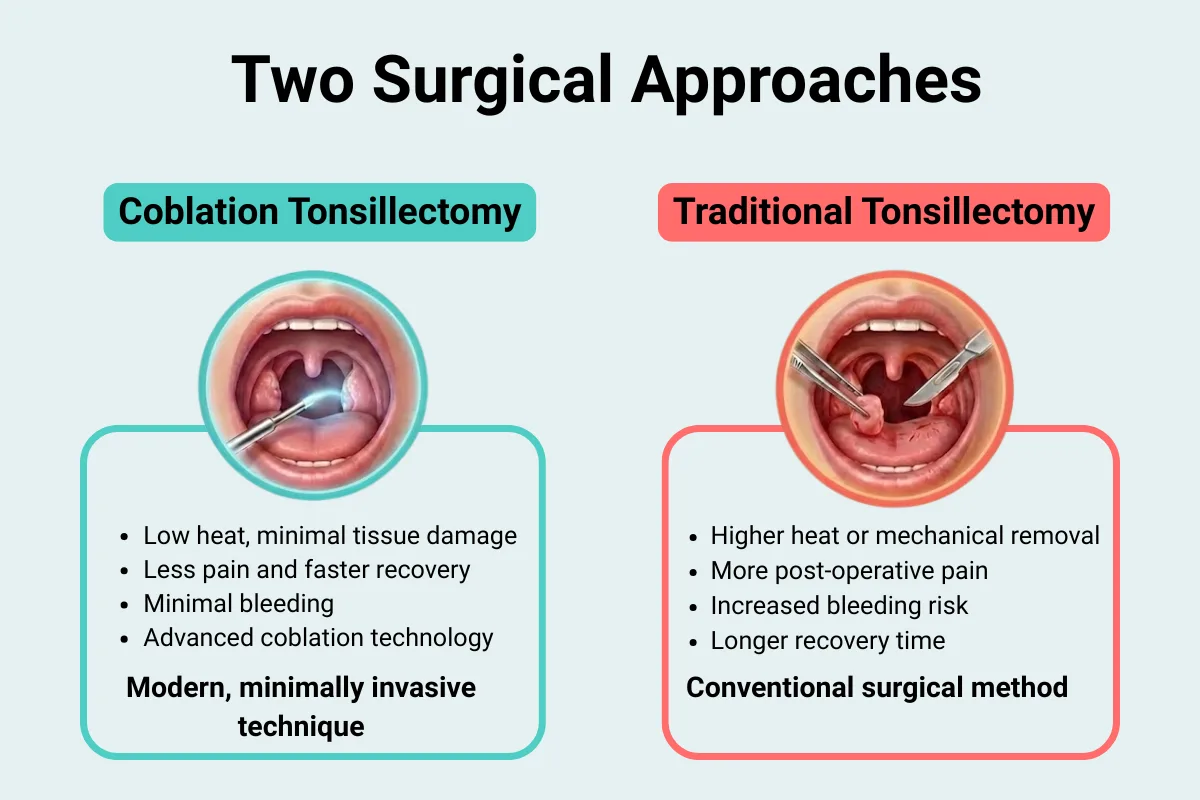
Image of coblation vs traditional tonsillectomy comparison

Two Surgical Approaches to Treating Tonsil Problems

  1. Traditional Tonsillectomy

For over a century, traditional dissection tonsillectomy (often called the “cold-knife” or “cold steel” method) has been widely regarded as the gold standard for removing tonsils. This technique involves using specialized surgical steel instruments, such as forceps, scissors, and a snare, to physically separate the tonsil from the surrounding muscle. This method is particularly reliable for managing complex cases, such as patients with significant scarring from chronic infections.

  1. Coblation Tonsillectomy

In coblation tonsillectomy, surgeons use a gentle “plasma field” made from salt water instead of high heat or traditional blades to carefully dissolve tonsil tissue. This technique is designed to be incredibly precise, focusing only on the areas that need treatment while protecting the surrounding healthy tissue. When comparing Coblation vs traditional tonsillectomy, Coblation is often highlighted for its lower operating temperatures of 60–70°C compared to the 400–600°C used in older heat-based methods.

While both techniques are effective, patients often ask how they differ in real-life recovery.

Why Many Patients Appreciate Coblation

When patients ask which tonsillectomy is less painful, clinical research frequently points to Coblation. Doctors often recommend it because it focuses on a “gentle-on-the-body” approach:

  • A “Cooler” Experience: Traditional heat-based tools can reach very high temperatures, but Coblation works at a much lower, cooler temperature. This may help reduce thermal injury to surrounding tissues.
  • Less Discomfort: Regarding Coblation tonsillectomy vs traditional tonsillectomy pain, many patients report experiencing less pain during their first week of recovery. 
  • Quickly Back to Your Routine: The Coblation tonsillectomy recovery time is often shorter than that of the traditional one.
  • Surgical Precision: This technology enables surgeons to work with great precision, often resulting in less time spent in the operating room and minimal bleeding during the procedure.

What to Expect During Recovery

No matter which surgical method you choose, your medical team’s primary goal is your comfort during the healing process. While a tonsillectomy is a routine procedure, it is normal to experience some temporary symptoms as your body recovers.

General Recovery Expectations

  • Minor Soreness: Some throat soreness is a normal part of the healing process, though it is temporary.
  • Dietary Adjustments: You will likely start with soft foods before gradually returning to your normal dietary routine.
  • Activity Levels: Most patients can return to work or normal activities within one to two weeks, depending on the technique used.
  • Standard Care: Post-operative care typically includes antibiotics, analgesics (pain relievers), and sometimes warm saline gargles, when appropriate.

Recovery by Technique

The recovery experience can vary significantly based on whether a traditional method or modern Coblation is used:

Recovery FactorTraditional TonsillectomyCoblation Tonsillectomy
Pain LevelsOften involves more significant pain during the first week.Generally associated with significantly less post-operative pain.
Dietary RecoveryTypically, it takes about 9 to 12 days to return to a normal diet.Patients often regain a normal diet much earlier, usually within 5 to 7 days.
Normal ActivityReturn to normal behavior/activity usually takes 11 to 14 days.Recovery is faster, often allowing a return to activity in 7 to 10 days.

Finding the Best Path for You

Tonsillectomy is one of the most commonly performed ENT procedures and is generally considered safe when appropriately indicated. When weighing the choice of Coblation vs traditional tonsillectomy, you are choosing between a time-tested gold standard and a modern technique designed for faster recovery for some patients. 

Speak with an ENT doctor to explore the best treatment path for you and begin your journey toward long-term relief.

FAQs

No, the anesthetic approach is generally the same for both techniques, typically involving general anesthesia.

Most studies found that Coblation is faster, with some recording times around 9–11 minutes compared to 12–30 minutes for traditional methods.

Yes, it is widely used for pediatric patients and has been shown to reduce post-operative pain and speed up recovery in children.

Author picture

Medically reviewed by SinusDoctor,
Dr G V K Chaitanya Rao

Sinusitis Basics

Sinus Self Assessment Test

Answer our simple 22 point Sinus Questionnaire and get an instant evaluation of the seriousness of your Sinus condition

Sinus FAQ's

Join our Newsletter

If you are suffering from sinusitis for a while, book an appointment with SinusDoctor for thorough diagnosis & treatment

Looking for a handy guide to manage Sinusitis?

Check out The Sinus Book by Dr. GVK Chaitanya Rao, a practical guide to understanding and managing your nose and sinus conditions.

The book will help you identify and manage symptoms, proven home remedies and help you understand the treatment options available for cure.