Does Chronic Sinusitis Lead to Loss of Smell?
The Frustrating Link Between Chronic Sinusitis and Smell Loss
Have you ever noticed that a stuffy nose dulls your ability to taste and smell? Now, imagine dealing with that loss for months or even years. Chronic rhinosinusitis is a persistent inflammation of your nasal passages and sinuses that lasts for 12 weeks or longer. For many patients, partial or complete loss of smell is one of the most frustrating and challenging symptoms to endure.
As India’s first Sinus super specialist, Dr. GVK Chaitanya Rao frequently meets patients who are desperate to regain their sense of smell. Research shows that up to 78% of people with chronic rhinosinusitis experience olfactory dysfunction, and this number can jump to an astonishing 94% if nasal polyps are present. But why exactly does this happen?
The Physical Blockage: Conductive Smell Loss
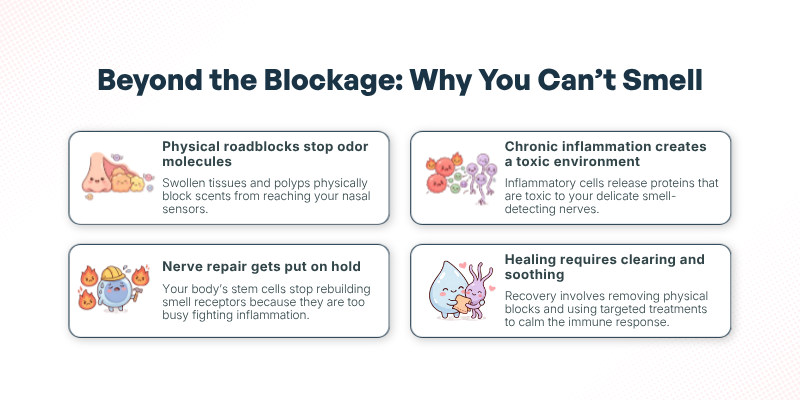
To understand why you cannot smell your morning coffee, we must first look at how odors travel. When you breathe in, odor molecules must reach the olfactory cleft, which is a small, specialized area high up in your nasal cavity. In chronic sinusitis, particularly chronic rhinosinusitis with nasal polyps, swollen tissues and benign growths physically block this pathway. We call this a conductive problem.
The smells are in the air, but the physical roadblocks inside your nose prevent them from reaching your smell receptors. Computational studies confirm that even minor swelling can drastically alter nasal airflow, effectively bypassing your olfactory sensors. Fortunately, treating these physical blockages is often the first step toward restoring your senses.
Beyond the Blockage: Inflammation and Nerve Damage
Sometimes, removing the physical blockage does not immediately bring your smell back. Why? Because chronic inflammation causes deeper issues, known as sensorineural loss. When your nasal lining is constantly inflamed, particularly with an immune response involving inflammatory cells called eosinophils, it releases proteins that are toxic to your delicate olfactory neurons.
Furthermore, ongoing inflammation alters your nasal mucus and tricks your olfactory stem cells into fighting the inflammation rather than regenerating new smell receptors. Simply put, your body is so busy defending itself that it stops rebuilding the nerve cells required to detect odors. It is a complex battle happening at the cellular level, which explains why recovery requires patience and targeted medical care.
The Hidden Impact on Your Daily Life
Losing your sense of smell is never just about missing out on pleasant fragrances. It fundamentally changes how you experience the world around you. Patients frequently report a reduced enjoyment of food, which can quickly lead to appetite changes and poor nutrition. Without the ability to detect hazards like spoiled food, gas leaks, or smoke, your personal safety is also deeply compromised.
Beyond the physical risks, this invisible condition carries a heavy emotional toll. Many patients feel isolated, frustrated, and even depressed because loved ones might not fully grasp what they are going through. It is a profound, life-altering sensory loss. Acknowledging this emotional weight is a vital part of your overall healing journey.
Effective Options for Management and Recovery
While regaining your sense of smell can be challenging, we have several effective tools to help you recover. Treatment plans are highly personalized to address both blockages and inflammation. Here are some of the most common options:
- Saline Nasal Irrigation: Washing your nasal passages with salt water helps clear mucus and irritants safely and effectively.
- Corticosteroids: Intranasal sprays or drops act to soothe the lining and reverse the effects of inflammation. Short courses of oral steroids may also offer rapid, though temporary, relief.
- Biologic Therapies: For severe cases with nasal polyps, advanced medications like Dupilumab target the specific immune pathways causing the inflammation.
- Endoscopic Sinus Surgery: If medications fail, navigation sinus surgery can safely remove polyps and open blocked sinuses, successfully improving smell for the majority of patients.
Take the Next Step Toward Healthier Sinuses
Living with chronic sinusitis and a diminished sense of smell does not have to be your permanent reality. Dr. GVK Chaitanya Rao and the expert team at Dr. Rao’s ENT Super Speciality International Hospital are dedicated to helping you breathe easier and experience life’s wonderful aromas again. Education is your best defense against sinus issues. For a deeper understanding, consider picking up a copy of The Sinus Book, authored by Dr. Chaitanya Rao.
You can also follow our Instagram page and subscribe to the SinusDoctor YouTube channel for easy-to-understand, jargon-free tips on managing your sinus health. Ready to take action? Schedule an appointment with Dr. GVK Chaitanya Rao today, and let us map out your personalized road to recovery.
FAQs
Yes, chronic sinusitis can lead to partial or complete loss of smell due to inflammation, swelling, and blocked nasal passages.
Chronic inflammation and nasal polyps can block odor molecules from reaching the olfactory nerves responsible for smell.
In many patients, smell improves with proper treatment such as nasal sprays, saline rinses, medications, or sinus surgery.
Yes, patients with nasal polyps have a much higher risk of smell loss because the polyps obstruct airflow inside the nose.
Treatments may include corticosteroids, saline irrigation, biologic therapy, and endoscopic sinus surgery.
You should visit an ENT specialist if smell loss lasts more than a few weeks or occurs with chronic sinus symptoms.