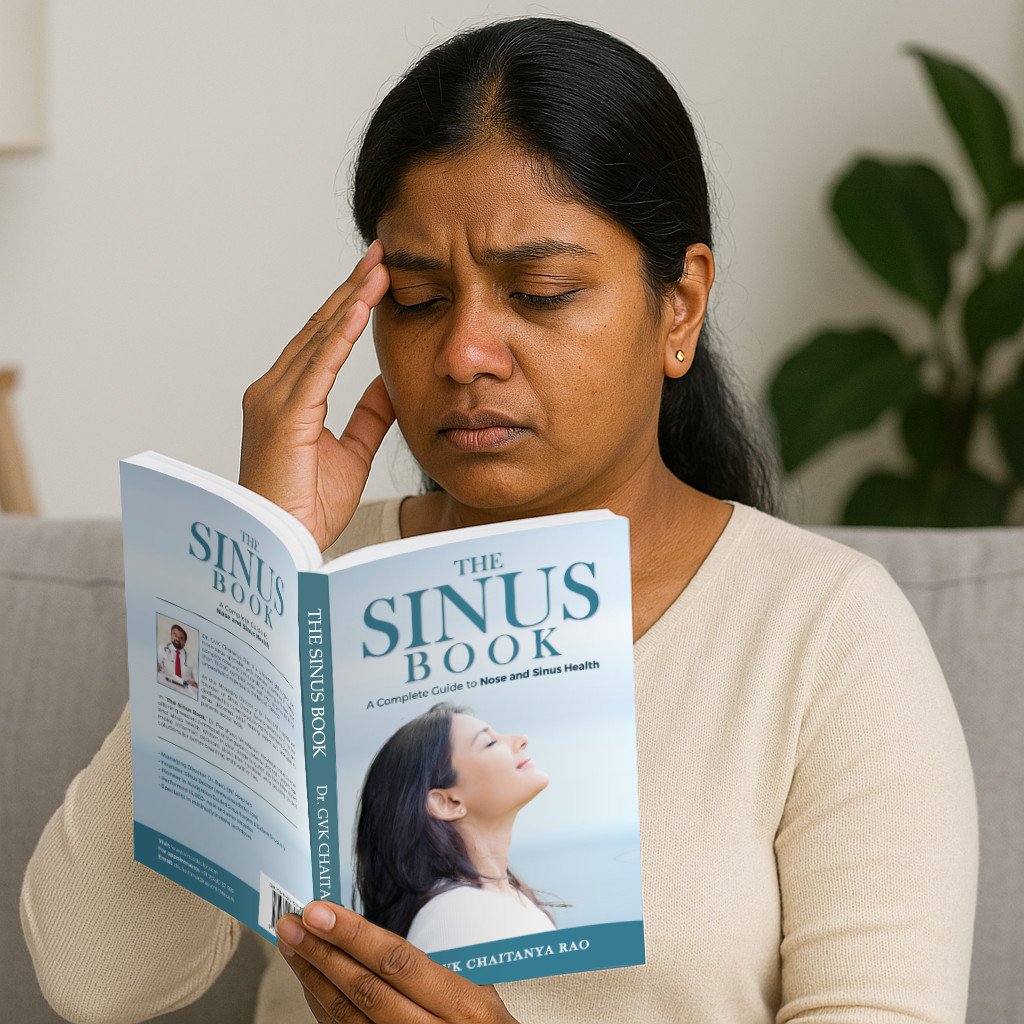
We all know how miserable a sinus infection can make you feel. The relentless facial pressure, the constant nasal congestion, the throbbing headaches, and the sheer exhaustion can make getting through the day a major struggle. When you are feeling this sick, a common worry naturally arises: Is my sinus infection contagious? Am I going to pass this misery on to my family members, my children, or my coworkers?
As India’s first Sinus Super Specialist, I hear this anxious question daily from patients in my clinic. The short answer is: it depends entirely on whether your infection is viral or bacterial. Let me break down the science for you in simple terms, so you know exactly what to expect and how to protect your loved ones.
The Viral Phase: Highly Contagious
Let’s start with the most common culprit: viruses. While you cannot give someone a “sinus infection” directly, you can easily spread the underlying virus—like the common cold, a rhinovirus, or the flu—that initially triggered your symptoms. However, the person who catches this virus from you may only develop a mild common cold and might never go on to develop a full-blown sinus infection themselves.
The viruses that trigger these initial symptoms are highly transmissible. Here is what you need to know about spreading the virus:
- Respiratory droplets: When you cough, sneeze, or even speak, you release virus-containing droplets into the air that others can inhale.
- Direct Contact: Transmission can happen through close physical contact, such as hugging or kissing.
- Contaminated surfaces: Viruses can survive on hard surfaces for hours or days. Touching doorknobs, phones, or keyboards can leave behind viruses that someone else might pick up if they touch the surface and then their face.
- Timeline of contagion: You can actually be contagious a day or more before your symptoms even begin. Your peak transmission risk is during your first 2 to 3 days when the viral load is highest, though you can remain contagious for the full 7 to 10 days of the illness.
The Bacterial Phase: Usually Not Contagious
If your illness lingers, it may transition into a secondary bacterial infection. This happens because the initial viral cold blocks your nasal drainage pathways, creating a trapped, fluid-filled environment in your sinuses. This disruption allows your body’s native bacteria—which are already naturally present in your respiratory tract—to multiply and overgrow.
Because bacterial sinusitis is caused by your own native bacteria taking advantage of a blocked sinus environment, it is rarely spread to others through casual contact. While rare bacterial strains (like Streptococcus pneumoniae) can technically be passed via respiratory droplets, they usually don’t cause a sinus infection in someone else unless that person’s immune system or sinuses are already compromised.
Furthermore, if I evaluate you and prescribe antibiotics for a bacterial infection, any minimal risk of transmitting those bacteria drops to zero within 24 to 48 hours of starting the appropriate treatment.
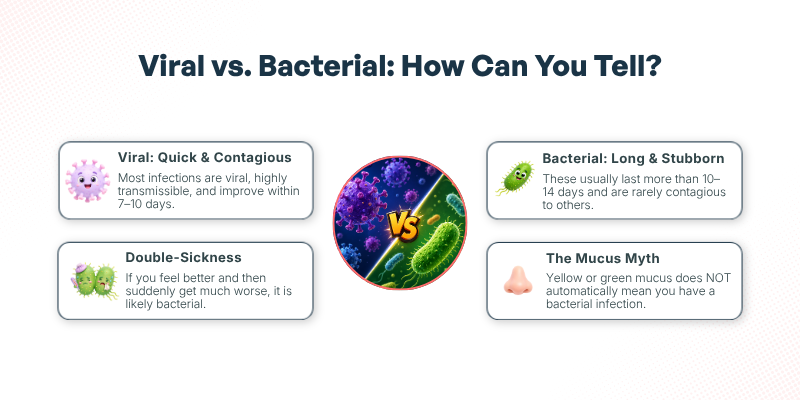
Viral vs. Bacterial: How Can You Tell?
How do you know which phase you are in? Duration is a key indicator. Viral infections typically improve on their own within 7 to 10 days, while bacterial infections stubbornly persist past 10 to 14 days without improvement. You should also watch for the “double-sickening” pattern: you start feeling better from a cold, and then your symptoms sharply worsen. Other warning signs of a bacterial infection include severe, localized facial pain, pain in your upper teeth, or a high fever above 103°F.
Ignoring these red flags can be dangerous. Let me share an example from my practice. Rajesh, a 42-year-old shop owner from Pune, believed his recurring nose blocks and headaches were “just allergies” and decided to wait it out using home remedies. Eventually, what started as a simple infection developed into severe bacterial sinusitis with orbital complications—the infection actually spread to the tissues around his eye, requiring immediate hospitalization and surgery.
If you want to understand more about warning signs, how your nasal anatomy works, and how to protect yourself from complications, I highly encourage you to check out my book, The Sinus Book. It provides in-depth insights into preventing simple issues from turning into major medical emergencies like Rajesh’s.
Also, remember to ignore the “mucus myth”—yellow or green mucus does not automatically mean a bacterial infection; viruses cause discolored mucus too as your white blood cells fight the illness.
When Is It Safe to Step Out?
So, when is it safe to return to work or school? If you have a viral infection, stay home until your fever has been gone for at least 24 hours without medication, and your acute symptoms, like coughing and sneezing, have subsided. Always continue practicing good hand hygiene and covering your coughs to protect vulnerable individuals around you.
In summary, the viral beginnings of a sinus illness are highly contagious, but lingering bacterial infections typically are not. Your health is an investment, and my team at Dr. Rao’s ENT is committed to providing patient-centric care to ensure you achieve the best clinical outcomes.
If your symptoms last longer than 10 days, if you experience the double-sickening pattern, or if you simply need expert evaluation, do not wait until a small problem becomes a big one.
Schedule an appointment with us today at https://sinusdoctor.com/get-an-appointment/. We are here to help you breathe freely and live better.
FAQs
Sinus infections themselves are not always contagious, but the viruses causing them—like the common cold—can spread easily.
If caused by a virus, it’s most contagious in the first 2–3 days and can last up to 7–10 days.
Bacterial sinus infections are usually not contagious because they result from bacteria already present in your body.
Practice good hygiene—wash hands often, cover coughs, avoid close contact, and disinfect frequently touched surfaces.
Viral infections improve within 7–10 days, while bacterial ones last longer, worsen after improvement, or cause high fever and severe pain.
Consult a doctor if symptoms last more than 10 days, worsen suddenly, or include severe pain, swelling, or high fever.