A heavy, throbbing ache behind the eyes, a nose that feels permanently bricked up, and a persistent “fog” that clouds the brain—for millions, chronic sinus pressure is an exhausting way of life. Most patients dismiss these symptoms as a localized annoyance, a “head cold” that refuses to leave. However, beneath the surface of a stuffed-up nose, a more complex physiological drama is unfolding.
While sinus issues are not a direct cause of chronic hypertension, they act as a potent catalyst for systemic strain. The link is found in a domino effect of physiological stress, disrupted oxygen intake during sleep, and the hidden cardiovascular cost of common “quick-fix” medications . To understand this connection, we must look at the nose not as an isolated filter, but as a critical regulator of the cardiovascular system.
“The nose is the gateway to the respiratory system,” says Dr. GVK Chaitanya Rao, India’s first Sinus super specialist and author of The Sinus Book. With over a decade of experience and 1000s of successful surgeries, Dr. Chaitanya Rao argues that ignoring the “nose-heart connection” is a missed opportunity for long-term health management.
The Stress Response: How Sinus Pain Triggers Cortisol
When you battle a viral or bacterial sinus infection, your immune system doesn’t just work locally; it mobilizes the entire body. This defense mechanism naturally raises heart rate and body temperature as the body attempts to neutralize the threat .
But it isn’t just the infection that strains the system—it’s the sensation of pain itself. Persistent sinus discomfort acts as a chronic stressor, signaling the adrenal glands to pump out cortisol.
“The pain, pressure, and discomfort associated with sinus infections can increase stress hormones like cortisol, pushing blood pressure levels higher .”
Reflection: This is a critical realization for many patients. We often categorize sinus pain as a “head” issue, but by triggering the “fight-or-flight” response, sinusitis forces the entire nervous system into a sustained “threat” state. This systemic alarm bells can keep blood pressure elevated long after the initial headache has faded.
The Nighttime Surge: Oxygen Depletion and Vasoconstriction
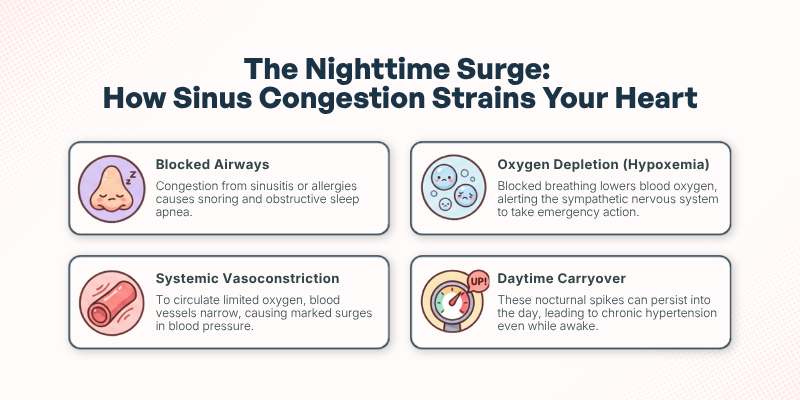
The most dangerous link between the nose and the heart often occurs while we are asleep. Nasal congestion from allergies or sinusitis often leads to airway obstruction, resulting in habitual snoring or obstructive sleep apnea.
When the airway is blocked, the body suffers from hypoxemia, or low oxygen levels in the blood. This triggers the body’s chemoreceptors, which alert the sympathetic nervous system to take emergency action. The result is vasoconstriction—the narrowing of blood vessels—and “marked surges in blood pressure” as the heart struggles to circulate what little oxygen is available.
These spikes aren’t just nocturnal. Research suggests that this sympathetic nerve activity can carry over into the daytime, meaning a night of poor breathing can lead to high blood pressure even while you are wide awake.
Reflection: Protecting the “heart” requires addressing the “nose” during rest. If the airway is restricted, the cardiovascular system never truly gets the recovery time it needs to maintain healthy pressure levels.
The Decongestant Trap: When the Cure Challenges the Heart
In the search for relief, many reach for over-the-counter (OTC) decongestants containing pseudoephedrine, phenylephrine, or oxymetazoline. These drugs work by shrinking swollen blood vessels in the nasal passages. However, this effect is rarely localized.
In many cases, these medications cause “systemic” constriction, tightening blood vessels throughout the body and increasing overall resistance. This is why the American Heart Association cautions those with pre-existing hypertension to use them with extreme care.
As a journalist, it is important to note the nuances in recent medical literature. A Cochrane systematic review found that while daily oral decongestant use over a week might have “little to no effect” on blood pressure for some, the quality of evidence remains low. Similarly, topical sprays (like oxymetazoline) appear less likely to spike pressure in those without pre-existing hypertension, though manufacturers still advise caution for anyone with heart disease.
Reflection: The “decongestant trap” creates a medical irony: the very pill taken to help you breathe easier may be the very thing placing your heart under the most significant strain.
The Statistical Link: Who is Most at Risk?
The connection between the sinuses and the heart is backed by significant epidemiological data. Studies have shown that men with seasonal or chronic allergic rhinitis typically have a systolic blood pressure reading that is 3.5 to 7 mm Hg higher than those without allergies.
The risk is particularly pronounced in individuals over the age of 50. Chronic inflammation from sinusitis has been linked to elevated C-reactive protein (CRP) levels and endothelial dysfunction—a condition where the lining of the blood vessels doesn’t function correctly. This dysfunction is a primary precursor to chronic hypertension.
Reflection: These figures suggest that sinus health is not a “minor” issue. It is a vital metric that should be monitored alongside cholesterol and blood sugar as part of a comprehensive wellness strategy.
Expert Recommendations: Safer Paths to Relief
If you are managing both sinus congestion and blood pressure concerns, Dr. GVK Chaitanya Rao recommends a transition away from systemic vasoconstrictors toward safer, targeted therapies:
- Saline Nasal Rinses: Effectively clears allergens and mucus without chemical side effects.
- Humidifiers: Maintains moisture in the nasal passages to prevent irritation.
- Specific Antihistamines: Options that do not contain vasoconstrictors are generally safer for the heart .
For chronic cases, Dr. Chaitanya Rao, who serves as the Managing Director of Dr. Rao’s ENT Super Speciality International Hospital—Asia’s largest ENT facility—utilizes “Navigation Sinus Surgery.” This advanced, GPS-like technology allows for extreme precision. By minimizing physical trauma and shortening anesthesia time, this approach significantly reduces the “stress response” and inflammatory burden on the patient’s cardiovascular system compared to traditional methods.
Conclusion: Beyond the Breath
We must stop viewing the nose as a separate entity from the heart. It is the primary regulator of our respiratory intake and, by extension, a critical influence on our cardiovascular stability. Managing your sinus health is not just about clearing a stuffy nose; it is a proactive strategy to lower cortisol, stabilize oxygen levels, and protect your heart from unnecessary strain.
Take Action for Your Health: To dive deeper into managing your respiratory health, read Dr. GVK Chaitanya Rao’s comprehensive guide, The Sinus Book, available on Amazon. For personalized care and advanced, heart-safe treatment options, Schedule a Consultation at Dr. Rao’s ENT Super Speciality International Hospital.
FAQs
Yes, sinus pressure can indirectly raise blood pressure through stress, pain, poor sleep, and reduced oxygen intake caused by congestion.
Chronic sinus pressure itself does not directly cause heart disease, but ongoing inflammation, sleep disruption, and stress may increase cardiovascular strain.
Sinus congestion often worsens at night because lying down increases mucus buildup and airway blockage, affecting breathing and sleep quality.
Some decongestants containing pseudoephedrine or phenylephrine may raise blood pressure and should be used cautiously in people with hypertension.
Yes, sinus infections can lead to facial pressure, headaches, dizziness, and brain fog due to inflammation and blocked sinus passages.
Saline nasal rinses, steam inhalation, humidifiers, hydration, and non-drowsy antihistamines are commonly recommended for safer sinus relief.