Waking up with a blocked nose, pressure around your face, or a mouth that feels dry can make a good night’s sleep difficult. If congestion seems to become worse as soon as you lie down, you may wonder whether changing your sleeping position can help. The best sleeping position for sinus drainage is not necessarily one fixed position for everyone, but a few simple adjustments can make night-time breathing more comfortable.
Why congestion worsens the moment you lie down
Nasal congestion can feel more noticeable when you move from sitting or standing to lying down. When you are upright, gravity and blood flow help keep the tissues inside the nose relatively less swollen. Lying down can increase blood flow to these tissues, making the nasal passages feel narrower.
There is also a normal process called the nasal cycle. Throughout the day and night, one side of the nose naturally becomes slightly more congested while the other side allows more airflow. Your body position can influence which side feels more blocked.
If you already have allergies, a cold, or inflammation in the nose and sinuses, this normal change can become much more noticeable at night.
This can create a frustrating pattern. You may breathe reasonably well during the day, only to feel blocked after getting into bed. Nasal obstruction can also contribute to disturbed sleep, particularly when congestion is persistent.
Your modern habits and your sinuses can also influence the factors that contribute to night-time nasal symptoms.
Elevation, side sleeping, and what actually helps drainage
So, what is the best sleeping position for sinus drainage?
For many people, sleeping with the head and upper body slightly elevated is worth trying. Elevation can make lying down more comfortable and may reduce the sensation of nasal blockage compared with lying completely flat.
A wedge pillow can provide more consistent support than placing several ordinary pillows underneath your head. Too many pillows can bend your neck forward and create discomfort.
Side sleeping is another position to try. Because body position can influence nasal airflow, changing sides may sometimes make one nostril feel clearer than the other. There is no need to remain on one particular side throughout the night. Comfort and easier breathing are the practical goals.
It is also important not to think of sleeping position as a treatment for sinus disease itself. Position changes may improve comfort, but they cannot correct causes such as persistent allergies, nasal polyps, a deviated nasal septum, or chronic sinus inflammation.
If congestion continues night after night, finding the reason for the blockage is more useful than continually changing your pillow arrangement.
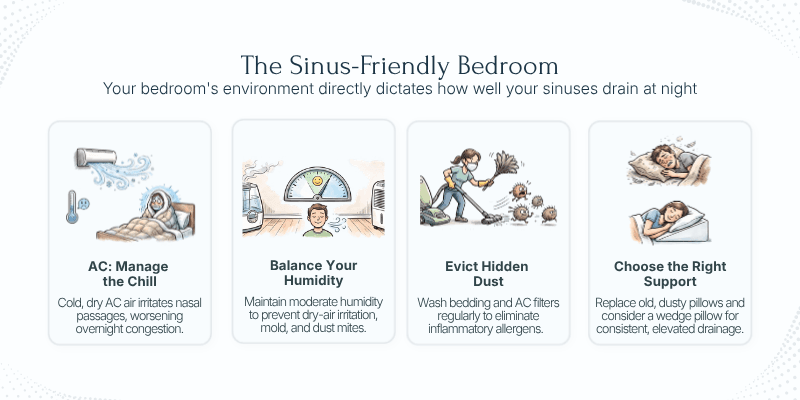
Bedroom factors: AC, humidity, dust, and pillows
Your sleeping environment can influence how your nose feels at night.
Air conditioning does not directly cause sinusitis, but cold or dry air can irritate the nasal lining in some people. This can be particularly noticeable when you sleep with AC running throughout the night.
Humidity needs balance. Very dry air can be uncomfortable for some people, while excessive humidity can encourage mould and dust mites. People with allergies may therefore notice more symptoms when indoor humidity is high.
This can matter in India, where bedroom conditions can change considerably between humid weather and prolonged AC use.
Dust is another factor worth considering. Bedding, mattresses and pillows can collect dust and allergens over time. Washing bedding regularly and keeping the sleeping area clean can help reduce exposure.
Pillows also deserve attention. If an old pillow has accumulated dust or has become uncomfortable, replacing it may improve sleep comfort. Keeping AC filters clean is similarly useful for maintaining indoor air quality.
These simple bedroom changes may complement measures for nasal health, but they should not replace medical assessment when congestion is persistent. For a broader understanding of the relationship between nasal symptoms and sleep, read how sinusitis affects sleep quality.
When poor night breathing signals something more than position
If you regularly struggle to breathe through your nose while sleeping, the position of your head may not be the main problem.
Persistent nasal blockage can occur with conditions such as allergic rhinitis, chronic sinus inflammation, a deviated septum, enlarged nasal tissues, or nasal polyps. These problems have different causes and may require different treatments.
Snoring is another reason to look beyond sleeping position. Occasional snoring is common, but loud habitual snoring, pauses in breathing, gasping during sleep, or significant daytime sleepiness can be signs of obstructive sleep apnoea, a condition in which the upper airway repeatedly becomes blocked during sleep.
If you wake frequently because you cannot breathe comfortably through your nose, or if your sleep remains poor despite improving your sleeping position and bedroom environment, an ENT assessment can help identify the cause.
As Dr. Chaitanya Rao, I would not recommend treating persistent night-time breathing difficulty simply as a pillow problem. The nose, sinuses and upper airway should be considered when symptoms continue.
Conclusion
The best sleeping position for sinus drainage is usually one that keeps you comfortable, supports easier nasal breathing, and avoids lying completely flat when that worsens congestion. Slight elevation and side sleeping are reasonable options to try.
However, sleeping position is only one part of night-time nasal comfort. Allergies, sinus inflammation, indoor air, dust and structural problems inside the nose can all contribute to congestion.
If these simple changes do not help, the next step is to identify why your nose remains blocked rather than continuing to experiment with sleeping positions.
If persistent congestion or poor night-time breathing is affecting your sleep, book an appointment with Dr. Chaitanya Rao for an assessment.
FAQs
It can. Slight elevation may make nasal breathing more comfortable for some people compared with lying completely flat. A wedge pillow can provide stable support without forcing the neck into an awkward position.
Not necessarily. A humidifier may be useful when indoor air is very dry, but excessive humidity can encourage mould and dust mites. Keeping the room comfortably humid and cleaning the humidifier regularly is more appropriate than simply adding as much moisture as possible.
Persistent blockage, repeated sleep disruption, loud snoring, breathing pauses, or waking with a sensation of choking or gasping deserve attention. A consultation with the best sinus specialist in Hyderabad can help determine whether the problem is related to the nose, sinuses, allergies, or the upper airway.