You’ve scheduled sinus surgery. Your surgeon mentions allergy testing. Now you’re wondering: Is this really necessary, or just another test?
Many patients don’t realize that allergies often play a significant role in sinusitis outcomes. The answer isn’t a simple yes or no, it depends on your specific situation. Understanding when allergy testing before sinus surgery matters can help you make informed decisions about your surgical plan and set realistic expectations for recovery.
Do You Need Allergy Testing Before Surgery?
Sometimes, and here’s how to know. If allergies are contributing to sinus symptoms, testing helps plan surgery for better outcomes. If a patient has straightforward sinusitis with no allergy history, it may not be necessary. The key is understanding your personal symptom pattern and whether allergies are part of the problem.
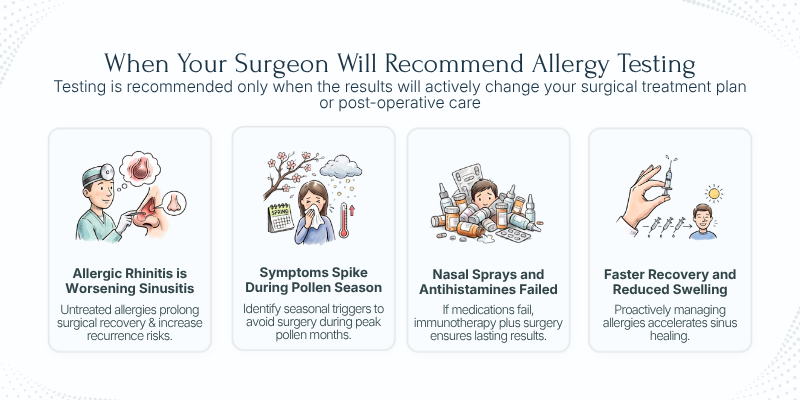
When Your Surgeon Will Recommend Allergy Testing
Several scenarios make allergy testing essential before surgery.
If allergic rhinitis is worsening sinusitis, testing identifies specific triggers. This matters because untreated allergies cause post-surgical recurrence and prolonged recovery. Knowing exactly what you’re allergic to allows your surgeon to recommend targeted management strategies during healing, whether that’s avoiding certain triggers, adjusting medication timing, or planning immunotherapy.
If sinusitis symptoms worsen during pollen season, seasonal spikes suggest environmental allergens are a major driver. Testing reveals which allergens trigger flare-ups, so you can plan follow-up care around high pollen months and take preventive steps during the critical healing window.
If antihistamines and nasal sprays alone haven’t controlled symptoms despite consistent use, this indicates allergies are a significant factor in your sinus disease. Testing clarifies whether immunotherapy, before or after surgery, could provide lasting relief beyond surgery alone.
When allergies are identified early and managed proactively during recovery, swelling decreases faster and healing accelerates. These adjustments make a measurable difference in both comfort and long-term outcomes. See our post on Allergic Rhinitis and Chronic Sinusitis: The Connection for more on how these two conditions interact.
Cases Where Allergy Testing Isn't Always Needed
Not every sinus surgery patient requires allergy testing.
If a patient has a clear structural problem, a deviated septum, nasal polyps, or turbinate hypertrophy, as the primary driver, allergies may play no significant role. Allergy testing won’t change the surgical approach. For example, if a deviated septum is physically blocking the sinuses 24/7, seasonal pollen won’t alter that structural diagnosis.
If there’s no allergy history, no seasonal symptom spikes, no known triggers, straightforward chronic sinusitis may be the only issue. Surgery alone will likely resolve symptoms without addressing allergies that don’t contribute to the problem. Patients with conditions like Nasal Polyps or structural blockages fall into this category.
Some acute or urgent surgical cases don’t require pre-operative testing. Testing can happen post-surgery if symptoms persist or recur. The recommendation is based on individual circumstances, not a universal checklist. Testing is a diagnostic tool, not a requirement for everyone undergoing sinus surgery.
What Allergy Testing Actually Reveals
Allergy testing identifies specific allergens the immune system reacts to: pollen, dust mites, pet dander, or mold. Results show whether allergies are mild, moderate, or severe. This information guides post-operative management, dictating when to take antihistamines, which triggers to avoid during healing, and whether immunotherapy could prevent future episodes.
Consider practical examples. A patient allergic to dust mites learns they need improved bedroom ventilation and air filtration during recovery to prevent inflammation. A patient allergic to pollen adjusts outdoor activity during high pollen seasons after surgery. These individual adjustments make a meaningful difference in healing and long-term control.
How I Approach This Decision
My approach is individualized rather than formulaic. Testing is recommended only when it will actually change your treatment plan and help you heal better.
During your consultation, discussing your symptom pattern is crucial. Do symptoms spike seasonally or remain constant? Is congestion worse at specific times? Have medications helped or failed? These clues guide the decision. If allergies appear to contribute to your problem, testing provides clarity and actionable information. If not, focus stays on what will genuinely help you recover well and stay symptom-free long-term.
This individualized thinking respects both your time and budget while demonstrating thoughtful clinical reasoning grounded in your specific needs.
If you’re unsure whether allergies play a role in your sinusitis, bring it up during your consultation. That conversation is exactly why pre-surgical assessments exist, to create a personalized treatment plan tailored to your situation. Ready to discuss whether allergy testing is right for your case? Schedule a consultation with Dr. Chaitanya Rao to assess your sinusitis and plan the best surgical approach for you.
Additional Resources
Want to understand sinusitis comprehensively before your appointment? Read The Sinus Book for a detailed guide to diagnosis, treatment, and recovery. Available on Amazon.
Have questions about allergy testing or sinus surgery? Follow @sinus.doctor on Instagram for patient education and expert insights.
FAQs
Not always. Allergy testing before sinus surgery is recommended when allergies are suspected to contribute to chronic sinusitis, seasonal flare-ups, or poor response to medications.
It identifies allergens such as pollen, dust mites, mold, and pet dander that may be causing ongoing nasal inflammation and worsening sinus symptoms.
No. Sinus surgery improves drainage and treats structural problems, but it does not cure allergies. Allergy management may still be needed after surgery.
Patients with allergic rhinitis, seasonal sinus symptoms, recurrent sinus infections, or symptoms that persist despite allergy medications are the best candidates.
Yes. Identifying and managing allergies before or after surgery can reduce inflammation, support faster healing, and lower the risk of recurrent sinus problems.
Yes. If your sinus condition is caused mainly by structural issues such as a deviated septum or nasal polyps and there is no evidence of allergies, allergy testing may not be necessary.