
In India, nearly 77 million adults over the age of 18 are currently living with Type 2 diabetes, and roughly 25 million people are classified as prediabetics, placing them at a higher risk of developing the condition. While diabetes is commonly linked to blood sugar control, it can also have a significant impact on overall wellbeing, including Sinus Health and immunity. Before we explore the main topic at hand, let us first understand what diabetes truly is.
Diabetes can be classified into three types: Type 1, Type 2, and gestational.
While the causes of Type 1 diabetes remain unknown, the primary way of managing it is through daily administration of insulin. Caused by underutilization of insulin and accounting for over 90% of diabetes cases, Type 2 diabetes can be prevented through lifestyle adjustments. Gestational diabetes occurs during pregnancy and typically doesn’t come with any symptoms. It is diagnosed through prenatal screening. When a woman suffers from it, there can be complications during delivery. Recurring sinus problems are common in people with diabetes. Early consultation with Dr. G. V. K. Chaitanya Rao, Best Sinus Specialist in Hyderabad, India, and a leading ENT surgeon, can help achieve long-term sinus relief.
What is the impact of diabetes?
Individuals can suffer from periods of:
- Fatigue, dizziness, and headaches
- Heightened risk of infections
- Reduced energy affecting work and routine activities
What is a sinus and why is its health important?
Sinuses are air-filled cavities around the nose and within the bones of the face. They are of four types: Frontal (in the forehead), Maxillary (in the cheeks), Ethmoid (between the eyes), and Sphenoid (behind the eyes). Featuring the mucous membrane, they lighten the weight of the skull, filter the inhaled air and enhance the voice quality. Healthy sinuses are important as they support proper breathing, prevent infections, improve sleep and energy levels and aid overall respiratory health. The quality of life of the person improves drastically, making them fit for professional and social life. When sinus health is compromised, it leads to sinusitis. Sinusitis is a condition in which the lining of the sinuses becomes inflamed and swollen, blocking mucus drainage and causing pressure, pain, and congestion. For a deeper medical understanding of sinus anatomy, sinus infections, and evidence-based treatment approaches, patients can refer to The Sinus Book.
What is the link between diabetes and sinus health?
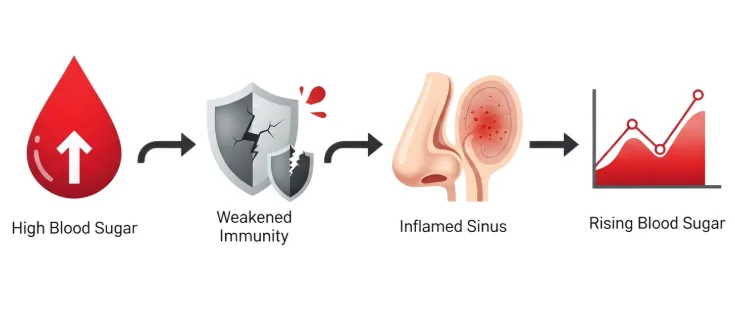
The connection between diabetes and sinus health is a bidirectional relationship where one condition can hamper the severity and management of the other.
Blood sugar and infection interrelationship
When a person suffers from sinusitis, the body releases hormones like adrenaline and cortisol to fight the infection. This is beneficial for boosting immunity, but the same hormones can block insulin from working effectively within the body. Blood sugar levels can rise sharply.
Contrarily, high blood sugar can adversely impact the immune system, making it complicated for the body to fight off a sinus infection. Bacteria and fungi grow exponentially in the mucous membranes due to their high-glucose content.
More susceptibility to certain sinus conditions
Chronic Rhinosinusitis with Nasal Polyps (CRSwNP): A population-based study found a substantial correlation between diabetes and chronic rhinosinusitis with nasal polyps, but interestingly, not for sinusitis without polyps. Patients with diabetes were found to have a higher prevalence of these polyps compared to non-diabetics.
Patients with diabetes who suffer from chronic rhinosinusitis are significantly more likely to experience olfactory dysfunction (loss of smell) persisting for longer than three months. This is not the case for non-diabetics.
How can people with diabetes protect their sinus health?
Maintain Mucosal Moisture:
- Nasal Saline Irrigation: Diabetic patients tend to suffer from dry nasal passages and decreased mucociliary clearance. The sinuses struggle to keep away bacteria and viruses naturally. To counter this, Nasal Saline Irrigation is the first-line treatment and preventive measure. Frequent flushing with saline assists in clearing out allergens and mucus without affecting blood sugar or interacting with other medications.
- Systemic Hydration: Hydrating is essential to keep mucus thin, supporting better drainage.
- Humidification: Using a humidifier, especially during colder months or in dry climates, prevents the drying and irritation of sinus tissues that can invite infection.
Target the Food Source of Infections:
- Due to high glucose levels in the mucous membranes, oral yeast infection can enter the nasal cavity, causing fungal sinusitis. Controlling blood sugar can lessen the probability of it.
- Saliva washes away bacteria, and people with diabetes often suffer from dry mouth. The bacteria can move to the sinuses. Enzymatic mouthwash or artificial saliva can aid in restoring the oral environment and protecting the sinuses.
When should a person suffering from diabetes visit a sinus doctor?
A sinus infection typically resolves on its own without intervention. However, consult a doctor if:
- Difficulty controlling blood glucose level during a sinus issue.
- Nasal congestion and headache lasting for over a week despite home care.
- Fever for over 4 days.
- Vision changes and swelling around the eyes.
- After a slight improvement, symptoms get worse within 10 days.
Comprehensive evaluation and personalised treatment for sinus conditions associated with diabetes are provided at Dr. Rao’s ENT Care, a leading ENT hospital in Hyderabad, India.
Conclusion:
Managing diabetes is not only about controlling blood sugar. In fact, it plays an important role in protecting overall health, including the health of the sinuses. This blog highlights how diabetes and sinus conditions influence each other in a continuous loop. Recognising sinus health as an integral part of diabetes care, people can take a more all-encompassing approach to their well-being – one that supports better breathing, fewer infections, and a healthier, more active life.