I am Dr. GVK Chaitanya Rao. If you have been advised turbinate surgery, you may have searched online and come across frightening stories about empty nose syndrome. The condition is real, but information online can make its risk seem greater than it is. Understanding what turbinates do and how modern surgery approaches them can help you make a more informed decision.
What empty nose syndrome is and why it is widely misunderstood
Empty nose syndrome, or ENS, is a condition reported in some people after nasal turbinate surgery. Patients may experience a paradoxical feeling of nasal obstruction despite having a physically open nasal passage. Other symptoms can include dryness, crusting, altered airflow sensation and difficulty feeling comfortable while breathing.
ENS is not simply the result of having had turbinate surgery. It has been associated particularly with substantial removal or alteration of turbinate tissue. The condition is also difficult to study because its symptoms can overlap with other nasal problems.
This is one reason online discussions can create unnecessary fear. A person with persistent nasal symptoms after surgery does not automatically have ENS. A detailed examination is needed to understand the actual cause.
For more context on how online information can differ from clinical evidence, read what the internet gets wrong about sinus problems.
The role of turbinates in airflow sensation
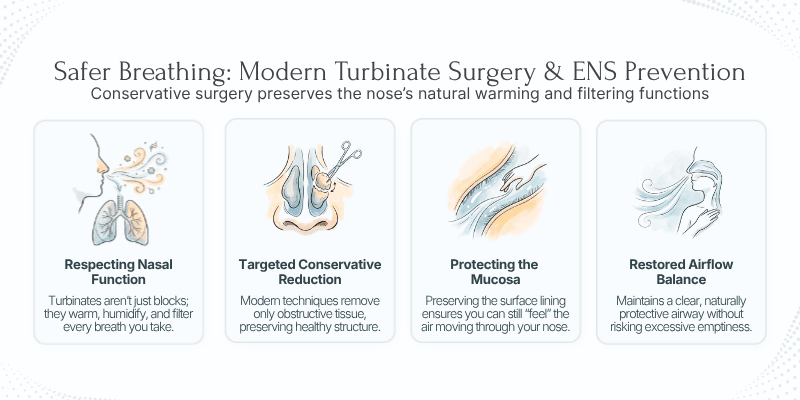
Turbinates are structures inside the nose that help regulate airflow. They contain tissue that can swell and shrink as part of the normal nasal cycle. They also help warm, humidify and filter the air you breathe.
Their role is therefore not simply to create an obstruction. The size and position of the turbinates influence how air moves through the nasal cavity and how airflow is sensed.
When turbinates become persistently enlarged due to allergies, inflammation or other causes, they can contribute to nasal blockage. In such cases, treatment may involve medication first. Surgery may be considered when obstruction persists despite appropriate medical treatment.
How modern conservative turbinate reduction avoids ENS
The goal of turbinate surgery should not be to remove as much tissue as possible. It should be to improve airflow while preserving the functions of the turbinates.
Modern approaches can reduce excess turbinate tissue while retaining an appropriate amount of mucosa and underlying structure. Techniques vary according to the patient’s anatomy and the cause of enlargement. The choice of technique and extent of treatment should therefore be individualised.
You can learn more about turbinate reduction surgery and why treatment needs to address the cause of obstruction.
No surgical technique can honestly guarantee that ENS or every other postoperative symptom will never occur. However, conservative tissue-preserving surgery is intended to maintain the normal functions of the nose while improving airflow.
Questions to ask your surgeon before turbinate surgery
Before agreeing to surgery, ask why your turbinates are enlarged and whether medical treatment has been adequately tried. Ask which part of the turbinate will be treated, how much tissue is expected to be preserved and which surgical technique is being recommended.
It is also reasonable to ask whether your symptoms could have another cause, such as a deviated septum or nasal inflammation. A surgeon should be able to explain what the procedure is intended to achieve and what its limitations are.
If you are considering surgery in Hyderabad, choosing a surgeon with experience in nasal and sinus conditions allows your symptoms, anatomy and treatment options to be assessed together.
Conclusion
Empty nose syndrome should not be dismissed, but it should also not become a reason to avoid necessary turbinate treatment. The key is understanding the function of the turbinates and using a conservative approach that aims to preserve healthy tissue.
If you are considering turbinate surgery and have concerns about empty nose syndrome, a detailed consultation can help you understand whether surgery is appropriate for you. You can schedule an appointment for an individual assessment.
Dr. Chaitanya Rao believes that informed decisions begin with understanding both the benefits and limitations of treatment.
FAQs
No. ENS is considered an uncommon complication, particularly with conservative, tissue-preserving approaches. The risk depends on the surgical technique, extent of tissue removal and individual factors.
Yes. Depending on the cause, treatment may include medicines and management of allergies or other nasal inflammation. Surgery is generally considered when significant obstruction continues despite appropriate medical treatment.
Look for a surgeon who evaluates the underlying cause of obstruction and explains the planned technique clearly. Someone searching for the best sinus specialist in Hyderabad should also consider experience with nasal anatomy, conservative turbinate techniques and appropriate patient assessment.