If there is one thing I have discovered in my years as an Ear, Nose, and Throat (ENT) surgeon, it is that anxiety keeps many patients away from the clinic. The mere mention of nasal endoscopy—putting a camera inside the nose—can make even the bravest adults feel nervous. I often see patients who have suffered from chronic sinus issues, breathing difficulties, or loss of smell for months, simply because they were too afraid of the diagnostic process to seek help.
Let me share a story about one of my patients, Suresh, a 28-year-old software engineer. When I first suggested a nasal endoscopy to understand the root cause of his breathing problems, he was visibly anxious. “When my doctor first mentioned putting a camera in my nose, I imagined something huge and painful,” he later recalled. “I almost walked out of the clinic!”.
Suresh’s fear is incredibly common, but it is entirely based on a misconception. Today, I want to demystify the nasal endoscopy procedure and reassure you that it is a quick, painless, and absolutely vital diagnostic tool.
What Exactly is a Nasal Endoscopy?
When you visit an ENT clinic, the first thing I do is a basic examination using a small tool called a nasal speculum and a headlight. While this is helpful, it only allows me to see the very front part of your nose, like checking the condition of your nasal septum or seeing if the front turbinates are swollen. Think of it as looking through the keyhole of a door.
To truly understand what is happening deeper inside your sinus cavities, we need to open the door and look inside. This is where the nasal endoscopy comes in. An endoscope is a specialized, very thin, flexible camera with a light at the end. To put it into perspective, the camera is about the size of a strand of spaghetti. It is specifically designed to navigate the natural curves of your nasal passages gently and safely.
What You Will Actually Feel (Hint: It Does Not Hurt)
The biggest fear patients have is that the procedure will be painful. Let me put your mind at ease: a nasal endoscopy is a minimum discomfort procedure. Here is exactly what happens during those crucial few minutes:
First, to ensure you are completely comfortable, I will numb your nose with a gentle local anesthetic spray. Once the numbing takes effect, the endoscope is carefully inserted. You will feel a slight pressure in your nose, and perhaps a sensation similar to water going up your nose while swimming. It is also completely normal for your eyes to water a bit during the process.
The entire examination usually takes only 2 to 3 minutes. As Suresh happily discovered, “Yes, I could feel something in my nose, but it wasn’t painful at all. My eyes watered a bit, but within minutes, it was over”.
What the Doctor Sees: The True Value of the Camera
You might wonder why we need to do this test at all. Why can’t we just prescribe medicine based on your symptoms? The truth is, many different sinus conditions share the exact same symptoms. A nasal endoscopy allows me to see the full length of your nasal passages and key sinus drainage areas that are otherwise hidden.
In just a few minutes, this powerful tool helps me uncover:
- Hidden Nasal Polyps: These are soft, painless growths that can completely block your nasal passages and ruin your sense of smell.
- Deep Sinus Infections: We can spot thick, infected mucus or signs of fungal sinusitis that need immediate attention.
- Enlarged Adenoids: This is especially critical in children. Adenoids are patches of tissue high up behind the nose, and when enlarged, they are invisible to a regular mouth or nose exam but can cause severe snoring, mouth breathing, and chronic ear infections.
- Structural Issues: We can identify exactly where a deviated septum or swollen turbinates are blocking your airflow.
Suresh’s favorite part of the experience was watching his own nasal passages on the monitor. Seeing the problem with your own eyes helps you understand your condition better and makes you an active partner in your treatment plan.
How to Prepare for Your Visit
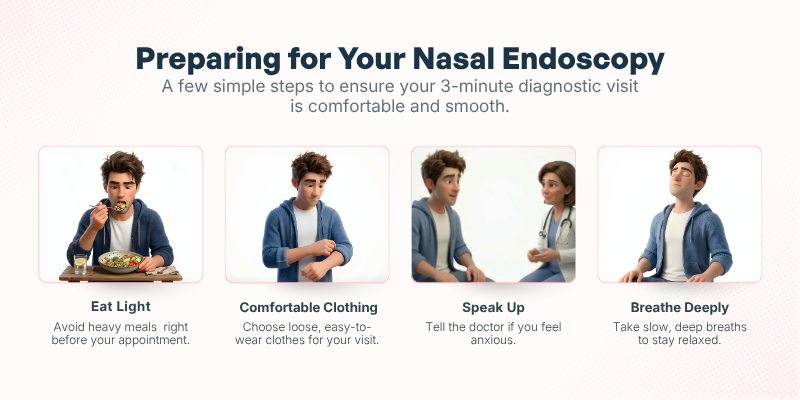
If you have an upcoming endoscopy, there is no need to panic. Here are a few simple tips to make your visit smoother:
- Avoid eating a heavy meal just before your examination.
- Wear comfortable clothing.
- Most importantly, tell me if you are feeling anxious. I can explain each step as we go, which helps many patients stay relaxed. Tensing up can make the examination more difficult, so taking slow, deep breaths is key.
Take the First Step Towards Better Breathing
Enduring months of congestion, facial pain, or sleepless nights is far worse than a simple 3-minute clinic procedure. An accurate diagnosis is the first and most crucial step toward finally breathing freely again. Do not let the fear of a tiny camera delay your healing.
If you have been putting off your check-up, I encourage you not to delay your diagnosis out of fear. Get a consultation at Dr. Rao’s ENT Super Speciality International Hospital to experience compassionate, patient-first care with me, Dr. GVK Chaitanya Rao.
To stay informed, I also welcome you to join my YouTube channel for daily clinic updates, healthy breathing tips, and fascinating facts about your nasal health. I look forward to helping you breathe well and live better!
FAQs
A nasal endoscopy is a simple procedure where a thin, flexible camera is used to examine the inside of your nose and sinuses for accurate diagnosis.
No, nasal endoscopy is not painful. A local anesthetic spray is used, and most patients only feel mild pressure or slight discomfort.
The procedure usually takes about 2 to 3 minutes and is performed in the clinic without any need for hospitalization.
It helps diagnose sinus infections, nasal polyps, deviated septum, and other causes of blocked nose or breathing problems.
No major preparation is required. Avoid heavy meals and stay relaxed during the procedure for a smoother experience.
Yes, nasal endoscopy is safe and commonly used in children to check for enlarged adenoids and other nasal issues.