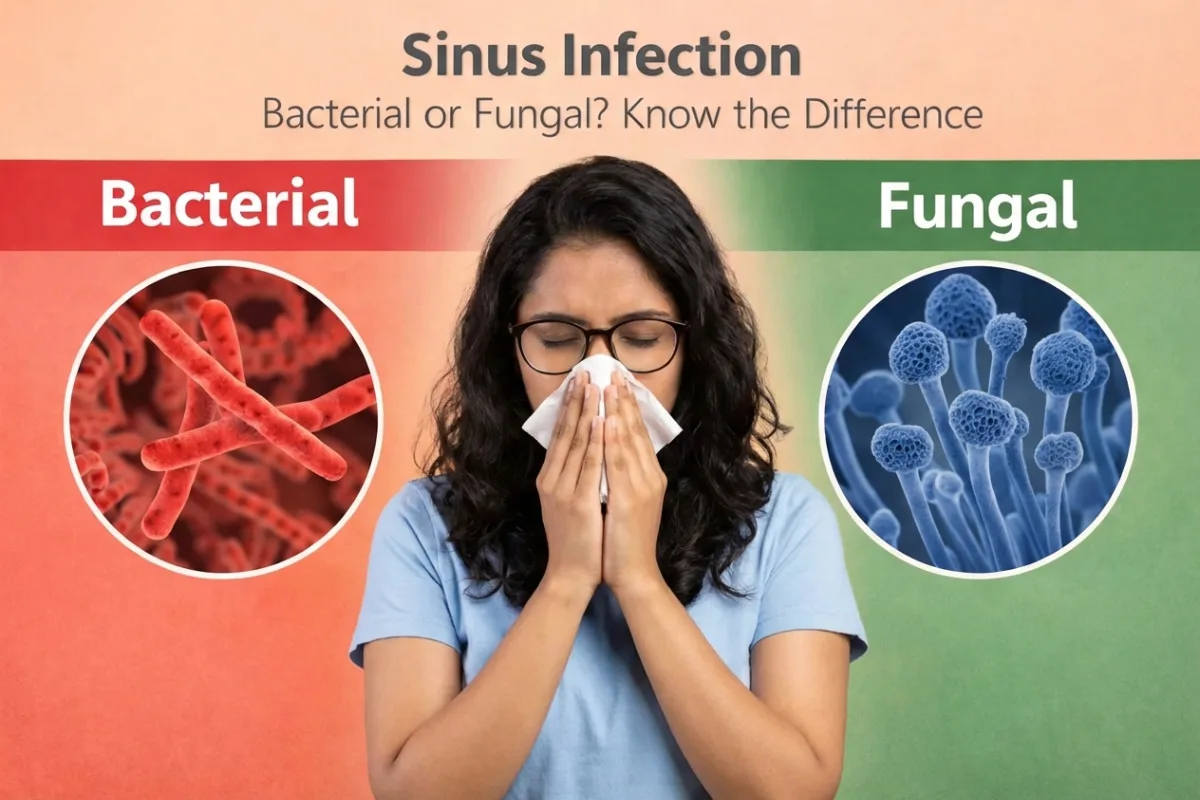
Before we explore the differences between fungal and bacterial sinusitis, let us first understand what sinusitis truly is. Sinuses are hollow spaces in the bones around the nose and eyes. They are lined with a thin layer of tissue called the mucosa, which produces a small amount of mucus to keep the nose clean and healthy. When these spaces get swollen and blocked, mucus builds up in the sinuses and can become infected. This condition is called sinusitis.
Not all sinus infections are the same, and treating them incorrectly can worsen the symptoms, thereby hampering the healing process. When the diagnosis is incorrect, patients may continue taking repeated courses of medication without relief, allowing the disease to progress. In my day-to-day practice, I often see patients who are taking the wrong medication without consulting a sinus specialist.
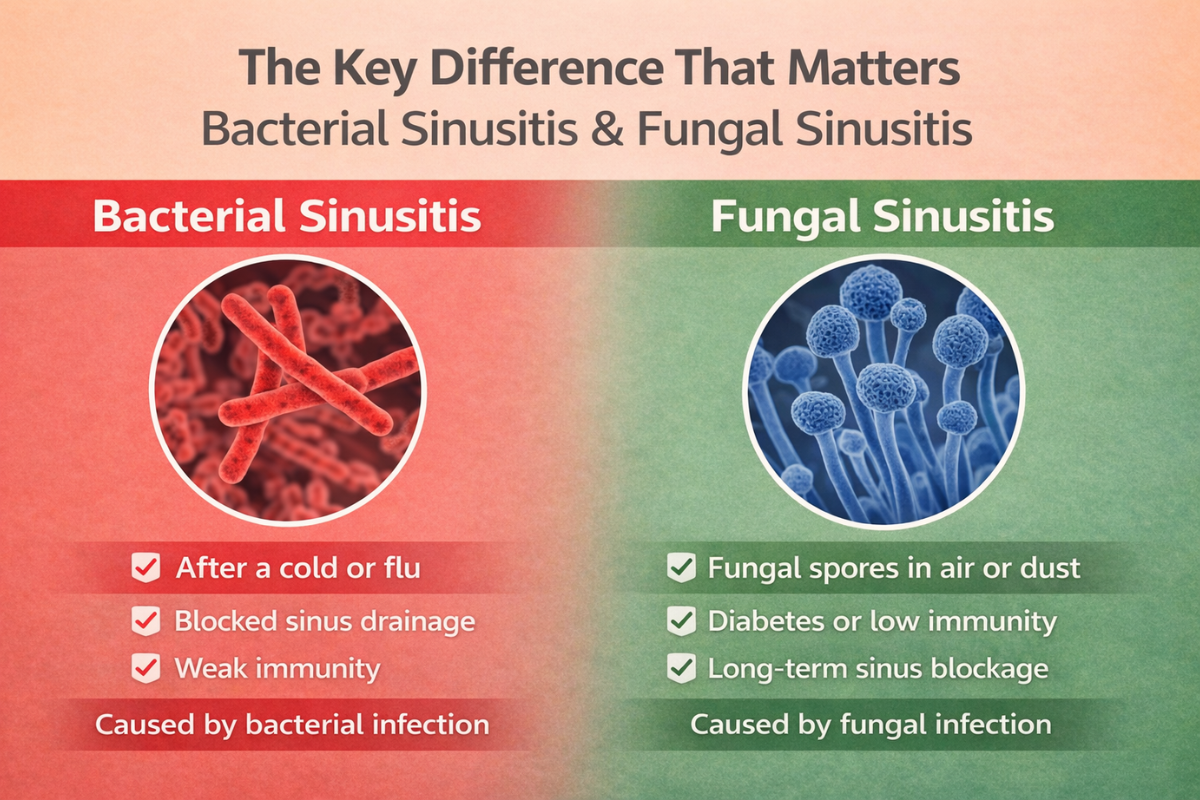
The Key Difference That Matters
Bacterial Sinusitis:
Typically, acute bacterial sinusitis follows a viral upper respiratory infection (like the common cold) that persists beyond 10 to 14 days. It can also happen after allergies, which cause swelling and block normal sinus drainage. This creates a breeding ground for bacteria like Streptococcus pneumoniae or Haemophilus influenzae.
Fungal Sinusitis:
Fungal infections are rarer and fundamentally different. Fungi are in the air we breathe, but they do not generally cause disease in healthy individuals. When they do cause sinusitis, it is classified into two major categories based on severity:
- Non-Invasive: This includes ‘Allergic Fungal Rhinosinusitis’ (AFRS), which is a severe allergic reaction to mold, and ‘Fungus Balls’ (mycetoma), which are clumps of fungus growing in a sinus cavity.
- Invasive: This occurs when the fungus attacks the tissue, blood vessels, and bone. This form is aggressive and commonly affects immunocompromised individuals, such as those with uncontrolled diabetes, HIV, or those undergoing chemotherapy.
Overlapping Symptoms
Symptoms of fungal and bacterial sinusitis are often similar, such as inflammation of the sinuses and blockage of passages. Because these early symptoms overlap, it is often difficult for patients to tell the difference on their own. This is why persistent or recurring sinus symptoms should be evaluated by an ENT specialist, as the underlying cause – not just the symptoms – determines the correct treatment.
- Nasal blockage and congestion
- Facial pain
- Headache
- Reduced sense of smell
Symptoms That Set Them Apart
Although fungal and bacterial sinusitis may feel similar in the beginning, certain symptoms can help distinguish one from the other. Recognizing them helps doctors identify the underlying cause and select the most effective treatment approach.
Bacterial Sinusitis:
Pus-like, yellow, or green nasal discharge accompanied by increased pharyngeal secretions.
Fungal Sinusitis:
Allergic or non-invasive: The nasal discharge is described as ‘thick’ and ‘highly viscous’, with a texture similar to ‘mud’. It can be golden yellow or greenish-black in colour. An endoscopic examination may reveal ‘cheesy and claylike’ mucus.
Invasive: In severe cases, patients may present with black necrotic crusts (eschar) or casts inside the nose, which is a sign of tissue death caused by fungal invasion.
For a clear visual explanation of how fungal sinusitis surgery, watch this video by our sinus specialist Dr G V K Chaitanya Rao, Best Sinus Specialist in Hyderabad, India and Leading ENT Surgeon: https://youtu.be/oBS1I_517aM
Treatment Approach
Bacterial Sinusitis:
Acute FormAcute bacterial sinusitis usually develops after a cold that doesn’t improve after 10 days. With the right treatment – often a short course of antibiotics along with supportive care – most patients feel significant relief within a few days, and the infection typically clears completely.
In acute bacterial sinusitis, the treatment is carried out through:
- Antibiotics (if symptoms persist beyond 7 to 10 days)
- Nasal sprays or saline rinses
- Decongestants
- Anti-inflammatory medications
Chronic Form
Chronic Bacterial Sinusitis is a long-standing sinus infection in which symptoms persist for more than 12 weeks or keep recurring, often due to ongoing inflammation or structural blockage in the sinuses. Treatment may shift from medical management to addressing structural obstructions, including procedures such as septoplasty (correcting a deviated septum) or balloon sinuplasty. For septoplasty, the patient typically requires approximately one week of recovery time. However, for balloon sinuplasty, patients usually experience a quick recovery, and many can return to normal activities, including work, as early as the next day.
Fungal Sinusitis:
While bacterial sinusitis is treated with antibiotics (specifically when symptoms persist beyond 10–14 days), fungal sinusitis requires a fundamentally different approach because antibiotics are ineffective against fungi.
- Endoscopic sinus surgery to remove fungal debris
- Antifungal medications (in selected cases)
- Long-term nasal irrigation
- Control of underlying conditions like diabetes
The recovery and management of fungal sinusitis are more complex and require long-term follow-up than those of bacterial sinusitis. Rather than a quick cure, treatment often focuses on control, monitoring, and preventing recurrence, depending on the type.
Final Thoughts
Whether you are dealing with persistent bacterial pressure or the complex symptoms of fungal growth, specialized care is the key to recovery. Don’t let sinus issues diminish your quality of life. Seek an expert opinion to identify the root cause of your symptoms and start a treatment plan tailored to your specific needs.
Talk to Hyderabad’s expert ENT Specialist, Dr. GVK Chaitanya Rao – Click here to book your appointment.